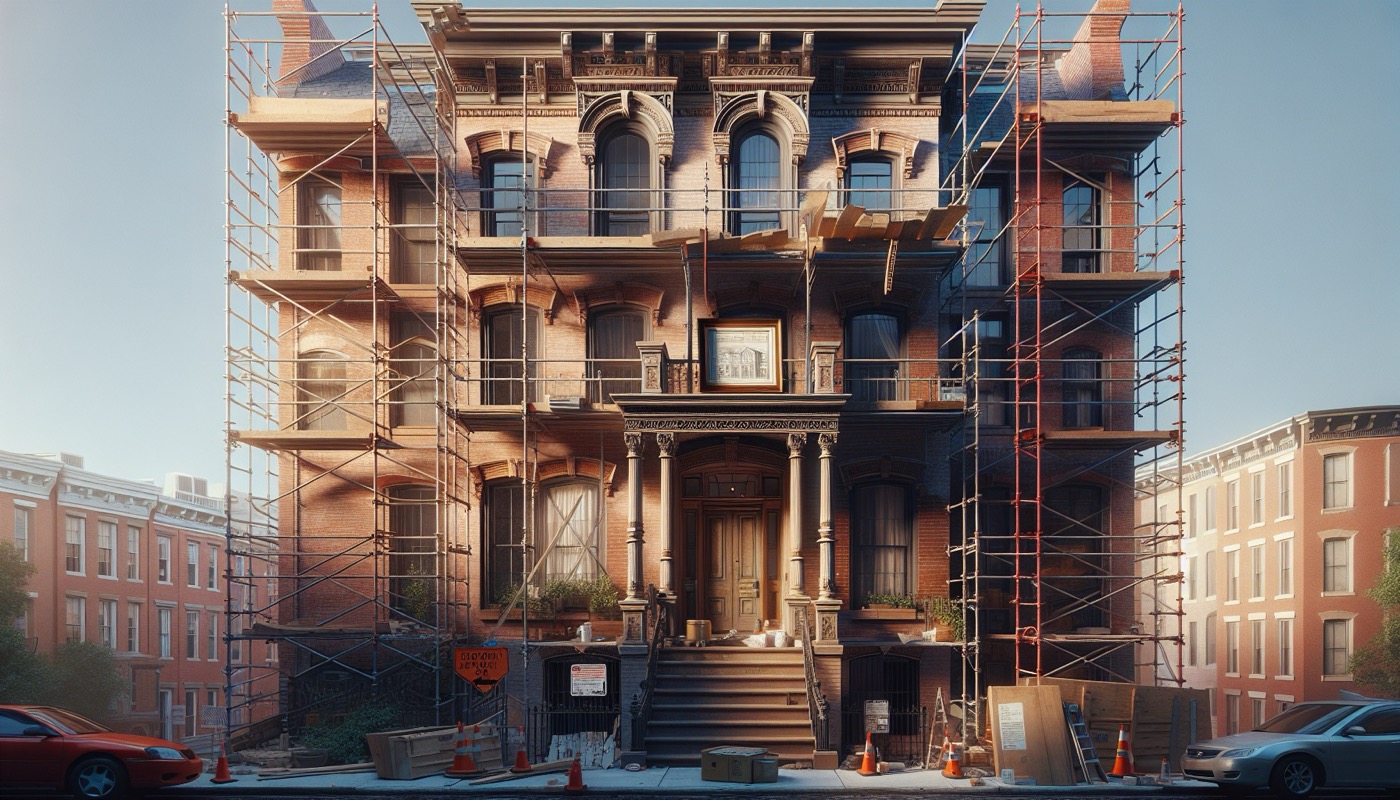
The District of Columbia is neither a state nor a county, which means construction in DC is regulated under its own framework — the DC Construction Codes — administered by its own agency: the Department of Buildings (DOB). DOB is new; it was spun out of the former Department of Consumer and Regulatory Affairs (DCRA) in 2022 under the Department of Buildings Establishment Act. If you pull up old DCRA documentation, the regulations are largely intact — only the agency name and the permit portal branding changed.
The District's construction codes are a DC-amended set of the 2015 I-Codes, adopted as the 2017 DC Construction Codes — the baseline set most projects work from through 2026. They include:
A 2024 code update cycle is in process to move DC to the 2021 I-Codes; adoption timing has been communicated via DOB rulemaking but the 2017 codes remain in force for permits pulled under the current framework.
DOB sorts permits into three review tracks based on scope:
For very limited work — typically minor interior alterations that do not affect structure, egress, fire protection, or mechanical/electrical/plumbing (MEP) systems, or small accessory work. Postcard permits are effectively over-the-counter: submitted and issued the same day if eligible. Examples: non-structural partition removal, cabinet replacement, like-for-like fixture replacement.
For slightly larger scopes that still fall within defined eligibility — single-family interior renovation without structural work, MEP replacement in kind, water-heater replacements. Express review is typically completed the same day the complete submission is reviewed, with a licensed design professional's stamp on any plans that rise above prescriptive tables.
Everything else — new construction, additions with structural work, change of use, commercial tenant fit-outs, multifamily renovations, façade work, anything triggering structural, life-safety, or zoning review. Full review goes through plan examiners in each discipline (Building, Structural, MEP, Fire Marshal, Accessibility, Zoning). Typical duration: weeks to months depending on scope and completeness of the submittal.
DC permits certain projects to use Third-Party Review — private plan review firms certified by DOB that perform plan examination in lieu of DOB staff. The DOB plan examiner role becomes a verification of the third-party reviewer's attestation rather than a line-by-line review, accelerating the permit timeline dramatically.
Not every project is eligible. Generally eligible: certain commercial tenant fit-outs, smaller new construction, additions, and alterations where structural, MEP, fire-protection, and accessibility review all fall within defined thresholds. Not eligible: projects requiring BZA/HPRB action, high-rise new construction, certain large-assembly occupancies, and any project involving hazardous materials review.
Permits in DC flow through Zoning as a gate. The DC Zoning Regulations (Title 11 DCMR) are administered by the Office of the Zoning Administrator inside DOB and, for variances and special exceptions, by the Board of Zoning Adjustment (BZA). BZA action triggers a formal hearing process with 30-plus day notice. Commercial projects may also require Zoning Commission action where the base zone does not accommodate the proposed use or density.
The zoning gate is the most common cause of schedule surprise for out-of-District developers: a project that meets IBC and MEP in every dimension will still fail issuance if the Zoning Administrator identifies a matter-of-right conflict.
DC has roughly fifty historic districts and thousands of individually designated landmarks. Work affecting the exterior of any designated property — including additions, windows, doors, porches, fences, roofing, and demolition — requires Historic Preservation Review Board (HPRB) review administered by the Historic Preservation Office (HPO) at the Office of Planning.
The review ladder:
A DOB permit cannot be issued for work touching a historic asset without HPO sign-off. Developers learn this by being asked for a "stamp from HPO" at permit issuance when they thought they were done.
When a property owner wants to demolish a designated structure or undertake work that HPRB has denied, the case escalates to the Mayor's Agent for Historic Preservation — a specially appointed administrative law judge who hears cases under three statutory standards: special merit, unreasonable economic hardship, or consistency with the preservation purposes. Mayor's Agent hearings are evidentiary, on the record, and precedent-setting.
DC's Green Construction Code (Title 12-K DCMR) applies to privately owned buildings 10,000 square feet or larger and publicly owned buildings 10,000 square feet or larger, with exemptions for residential occupancies under certain thresholds. Compliance is demonstrated through either the prescriptive Green Construction Code path or one of the approved alternative compliance paths (LEED Silver, Green Globes 2, ENERGY STAR Multifamily High Rise, or equivalent).
DC's energy benchmarking and performance standards (BEPS) operate downstream of the Green Construction Code: buildings that meet the code at construction still have ongoing energy-performance obligations under the Clean Energy DC Act.
A typical Full-Review commercial permit in DC follows this arc:
DC construction moves on three parallel tracks: the Construction Codes (IBC/IRC/IEBC as amended), Zoning (matter-of-right or BZA), and Historic Preservation (HPO/HPRB where the overlay applies). Missing any one of the three stops the permit.
The most common out-of-town misconception is that DC works like a typical large-city municipal permit. It does not. DC is a state, a county, and a city combined — the codes are the District's own, the zoning is the District's own, and historic preservation touches more of the building stock than in any comparable metro. Plan for the gate you did not expect.
Primary sources for this essay: DC Department of Buildings (DOB); Title 12 DCMR (DC Construction Codes); Title 11 DCMR (DC Zoning Regulations); DC Historic Preservation Office and Historic Preservation Review Board (DC Code § 6-1101 et seq.); Clean Energy DC Act (D.C. Law 22-257). DOB's Permit Wizard and the HPO Guidelines are the practitioner-facing companions.