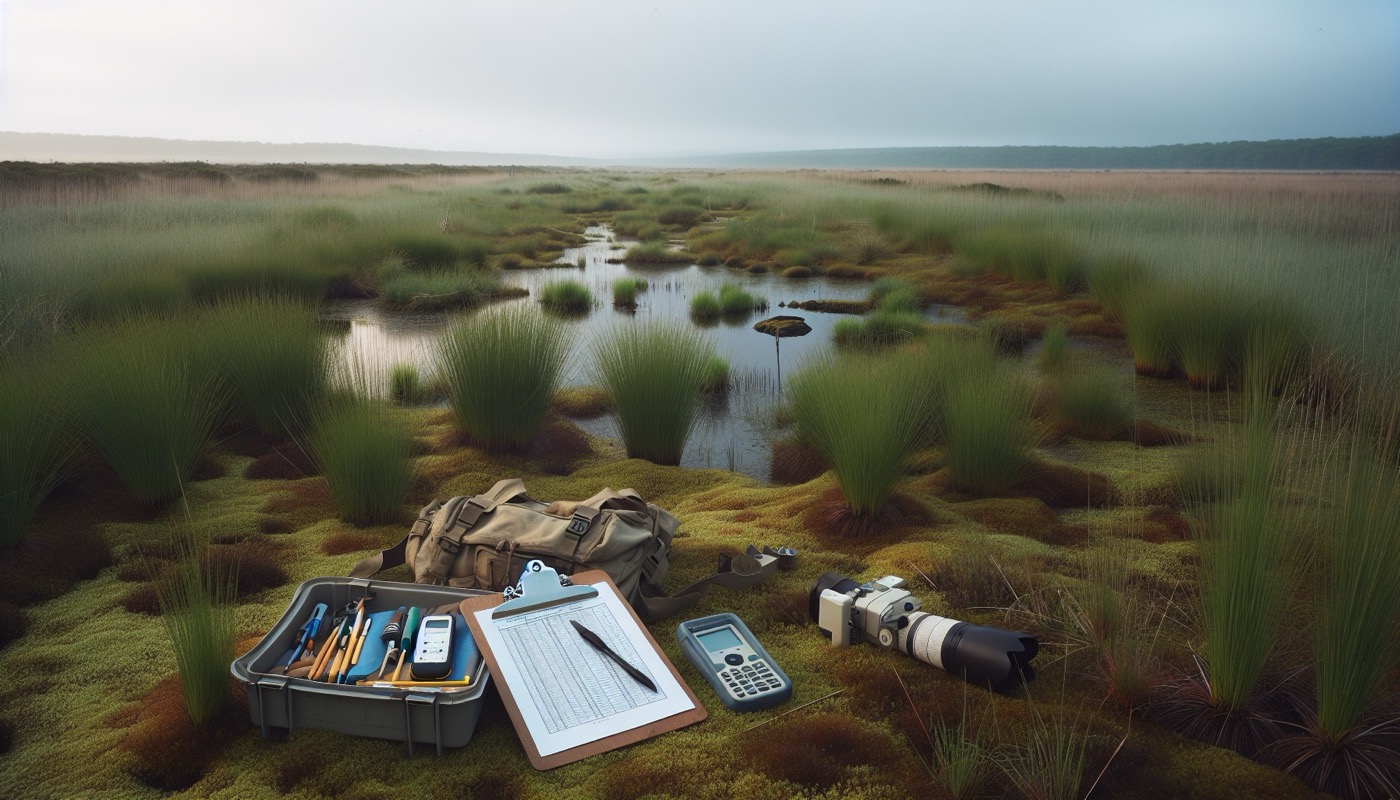
Any construction project with a federal nexus in the Mid-Atlantic may trigger Section 7 of the Endangered Species Act — consultation between the federal action agency and the U.S. Fish and Wildlife Service (USFWS) or the National Marine Fisheries Service (NMFS) on whether the action may affect listed species or designated critical habitat. Section 7 does not regulate private conduct directly; it regulates federal agency actions that touch private construction. Where it applies, it is as consequential to the schedule as Section 106 NHPA or the Corps' § 404 mitigation analysis.
The governing statute is the Endangered Species Act of 1973 (16 U.S.C. § 1531 et seq.). The implementing regulations are at 50 CFR Part 402. This essay covers Section 7 as it applies to construction.
Section 7 applies when there is a federal action — a federal agency authorizing, funding, or carrying out a project. Common federal actions that pull construction into Section 7:
If there is no federal nexus — purely private, privately-permitted construction — Section 7 does not apply, but Section 9's prohibition on "take" of listed species still does. Section 9 applies to all persons regardless of federal nexus.
Section 7(a)(2) requires federal agencies to ensure their actions are "not likely to jeopardize the continued existence of any endangered species or threatened species or result in the destruction or adverse modification of critical habitat." The standard is population-level, not individual-animal-level. "Jeopardy" is a formal determination that the action, taken as a whole, is reasonably likely to reduce appreciably the likelihood of both the survival and recovery of the species.
Section 9 prohibits "take" of listed species — defined broadly to include "harass, harm, pursue, hunt, shoot, wound, kill, trap, capture, or collect" plus attempts. USFWS regulations construe "harm" to include significant habitat modification that kills or injures listed species. Section 9 applies to everyone — private parties, federal agencies, state and local governments.
The distinction matters in practice: a federally-assisted project goes through Section 7 consultation and, if the agency demonstrates no jeopardy, typically receives an incidental take statement that authorizes some take. A private project without federal nexus has no Section 7 consultation; it must either avoid take entirely or obtain a Habitat Conservation Plan (HCP) + Incidental Take Permit (ITP) under Section 10 to authorize take.
The federal action agency determines whether the action "may affect" listed species or designated critical habitat. Three possible conclusions:
Screening typically uses USFWS IPaC (Information for Planning and Consultation) to identify listed species with potential range in the project area, followed by habitat assessment to determine whether suitable habitat is present.
For "not likely to adversely affect" determinations, the action agency submits a determination to USFWS/NMFS for written concurrence. USFWS has 30 days (in most cases) to concur or request formal consultation. Concurrence ends Section 7 obligations.
When effects are likely to be adverse:
Formal consultation statutory timeline is 135 days (90 days for consultation + 45 days for BO drafting), but extensions are common on complex projects.
The smallest turtle in the U.S., inhabiting calcareous wet meadow, sedge meadow, and fen habitats. Common across PA, NJ, MD, DE, and VA in appropriate habitat. Bog turtle surveys (Phase 1 habitat assessment, Phase 2 presence-absence survey) are standard due diligence for wet-meadow, fen, or calcareous wetland sites. Positive Phase 2 findings trigger formal consultation.
Widespread in Mid-Atlantic forests. Uplisted from threatened to endangered effective March 2023 due to white-nose syndrome mortality. Tree-clearing activities during the April-October active season require consideration. USFWS has issued a 4(d) rule that provides take exemptions for certain activities with specified conditions.
Overlapping range and conservation concerns with NLEB. Tree-clearing in maternity habitat during the pup-rearing season (June 1 – July 31) is a principal concern.
Distinct Population Segments (DPSs) listed as endangered in the Chesapeake, New York Bight, Carolina, and South Atlantic. In-water work, dredging, and bridge construction in the Delaware, Potomac, James, and other large Atlantic-draining rivers trigger NMFS consultation.
Similar concerns to Atlantic sturgeon for in-water work.
Atlantic coast beaches; beach management and coastal development face restrictions during nesting season (March through August approximately).
Delaware Bay horseshoe crab spawning grounds are critical staging habitat; shoreline and adjacent development affect rufa red knot.
Status may change during current project cycles; developers should monitor for final listing action.
Dwarf wedgemussel, various pearlshells. Listed species in specific Mid-Atlantic drainages. In-stream or near-stream construction may trigger formal consultation.
State-listed species (Maryland, Virginia, Pennsylvania, New Jersey, Delaware, DC) add further species not federally listed but protected under state law. State wildlife agencies consult separately from federal Section 7.
A BA for construction typically includes:
Private projects without federal nexus that would cause take of listed species cannot simply proceed. They must avoid take or pursue a Habitat Conservation Plan (HCP) and Incidental Take Permit (ITP) under Section 10(a)(1)(B). HCPs can be single-project or programmatic. The Section 10 process is separate from Section 7 and typically takes years.
For most Mid-Atlantic private construction, Section 10 is avoided by designing around species constraints — timing restrictions on tree clearing, buffer zones around known nests or habitat, avoidance of suspected bog turtle habitat.
Designated critical habitat — published in the Federal Register after rulemaking — adds a second Section 7 consideration. A federal action that may destroy or adversely modify critical habitat triggers consultation independent of species take effects. Designated critical habitat for Mid-Atlantic species is relatively limited but includes specific reaches for sturgeon DPSs and certain freshwater species.
Three practical rules:
Section 7 is a process, not a prohibition. For most Mid-Atlantic construction that triggers consultation, the outcome is a "not likely to adversely affect" concurrence (informal consultation) after documented surveys and design measures. Formal consultation and Biological Opinions are less common but meaningfully more expensive and schedule-critical when they do occur.
Primary sources for this essay: Endangered Species Act (16 U.S.C. § 1531 et seq.); 50 CFR Part 402 (Section 7 regulations); 50 CFR § 17.21 (take prohibition for endangered species); USFWS IPaC tool (ipac.ecosphere.fws.gov); USFWS Section 7 Consultation Handbook; applicable USFWS 4(d) rules for threatened species. State listed species are administered by state wildlife agencies (Maryland DNR, Virginia DCR, PA Fish & Boat Commission, NJ DEP, Delaware DNREC, DC DDOE).