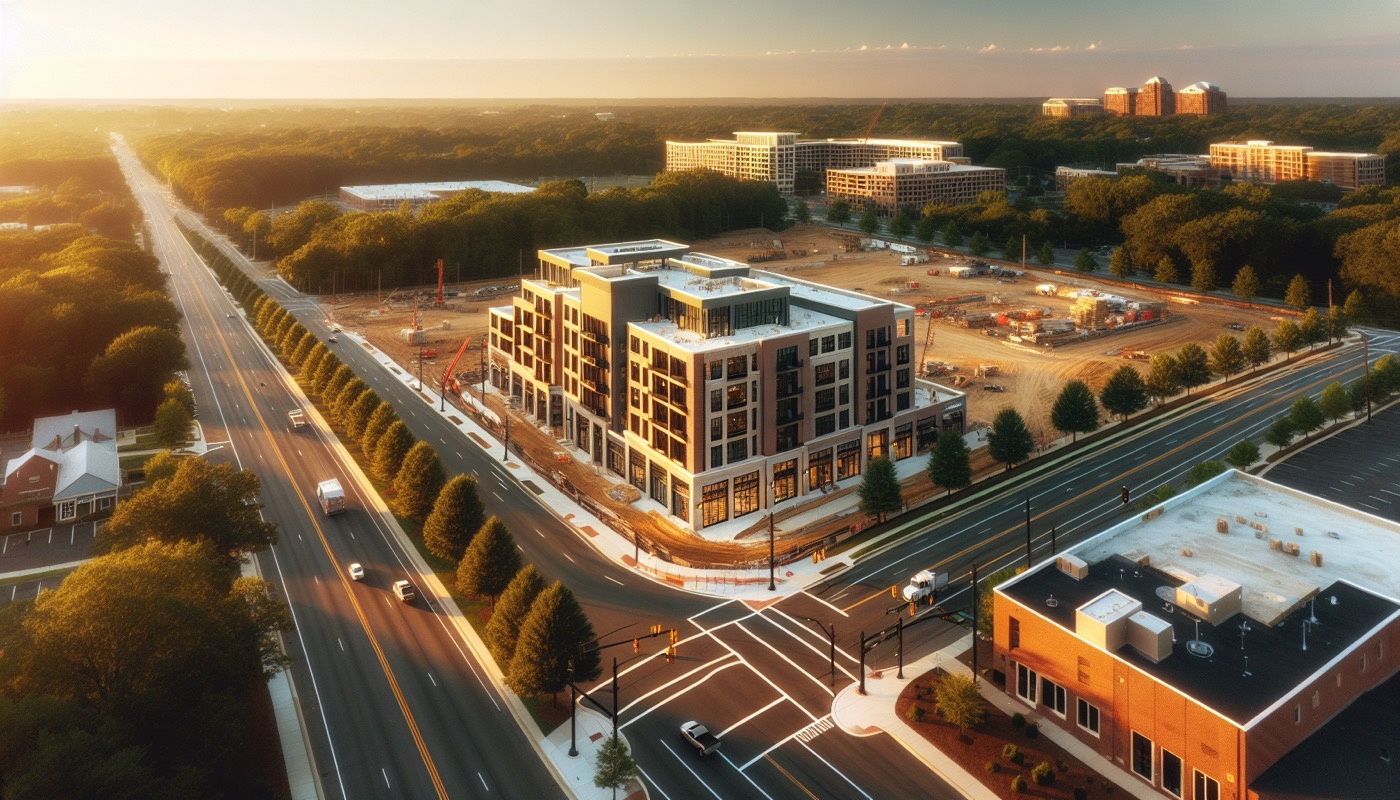
Henrico County surrounds Richmond on three sides and contains much of the metro area's commercial, residential, and industrial growth. The county is distinctive among Virginia jurisdictions for its urban road maintenance exception — one of only three Virginia counties (with Arlington) authorized to maintain its own secondary roads rather than relying on VDOT. That exception, plus Henrico's rapidly-growing Short Pump commercial corridor and emerging data-center market, shapes permitting here in ways that distinguish it from other VA counties.
The Department of Building Inspections administers the Virginia USBC, issuing building, trade, and site-work permits. The online permit portal handles intake and review. Inspection scheduling and final approval run through the department.
The Department of Planning administers zoning, subdivision, site plan, rezoning, special exception, and special use permit review. The Planning Commission (advisory) and Board of Supervisors (final) constitute the entitlement path. The Board of Zoning Appeals handles variances.
Henrico's zoning ordinance uses the traditional Virginia mix of residential, commercial, and industrial districts with overlay districts addressing environmental resources, transit-oriented development, urban mixed-use centers, and the Chesapeake Bay Preservation Area where applicable.
Under Virginia Code provisions, Henrico maintains its own secondary roads — the county road network below the primary state route system. Most Virginia counties rely on VDOT for all non-primary road maintenance. Henrico (and Arlington) exercise local authority, operating a county Department of Public Works with road construction and maintenance responsibilities.
Practical consequences:
See our VDOT Land Use Permit essay for the VDOT framework elsewhere in Virginia.
The Short Pump / West End commercial corridor along Broad Street (Route 250) and the surrounding area is Henrico's premier suburban commercial market — regional malls, high-density mixed-use, office corridors, and adjacent multifamily residential. The county's planning documents have increasingly emphasized transit-oriented, walkable, and mixed-use development in this corridor.
Data-center development is expanding in Henrico, with particular concentration in the Innsbrook corporate center area and along emerging power-transmission corridors. Dominion Energy coordination, water utility capacity, and noise performance standards all feature in data-center permit review.
Portions of Henrico are within Tidewater locality CBPA coverage — specifically the southern and eastern portions near the James River and the James' tributaries. The 100-foot RPA buffer applies landward of tidal wetlands and tidal shoreline.
See our Virginia CBPA essay.
Most of the county is outside the CBPA's tidal reach, but the southern edge along the James is within.
Henrico contains portions of Richmond National Battlefield Park — Civil War battle sites including Cold Harbor, Gaines' Mill, and the Seven Days Battles sites. Federal-nexus projects affecting the park's setting trigger Section 106 NHPA. Local historic districts include Richmond-adjacent neighborhoods like Lakeside and specific building-scale landmarks.
The Henrico County Department of Public Utilities provides water and sewer service throughout most of the urbanized county. Service capacity, tap fees, and system extensions coordinate with the department. Rural western and northern areas use private wells and septic.
Stormwater management follows Virginia's VSMP framework, with the county as the local VSMP authority. The Henrico Environmental Services Division administers sediment control and stormwater plan review.
See our Virginia VSMP essay.
Three practical rules for Henrico:
Henrico's combination of Virginia USBC uniformity, the urban maintenance exception, rapid Short Pump growth, emerging data-center activity, and Richmond-metro suburban density produces a permit environment where the building code is statewide-uniform but the entitlement side has a local flavor not found in neighboring counties.
Primary sources for this essay: Henrico County Code (Chapter 24 Zoning, Chapter 19 Subdivision, Chapter 6 Buildings); Virginia USBC (13VAC5-63); Virginia Code Title 15.2 Chapter 22; Henrico County Comprehensive Plan; Henrico County VDOT urban maintenance exception provisions; Chesapeake Bay Preservation Act (Va. Code § 62.1-44.15:67 et seq.); VSMP (Va. Code § 62.1-44.15:24 et seq.). Henrico Department of Building Inspections, Department of Planning, Department of Public Works, and Department of Public Utilities are the agency resources.