Lehigh Valley PA Construction Permits: Allentown, Bethlehem, Easton, and the Logistics Corridor
Pennsylvania / Lehigh and Northampton Counties · Field reference for the region's three core cities and surrounding townships
The Lehigh Valley — Lehigh and Northampton Counties — is Pennsylvania's third-largest metro area, anchored by three cities (Allentown, Bethlehem, Easton) and extensive suburban-industrial townships. Along the I-78 / Route 22 corridor, the valley has become one of the East Coast's largest logistics and distribution markets, with hundreds of warehouse / fulfillment buildings built or under construction over the past decade. The permit framework follows the Pennsylvania pattern: municipal UCC enforcement, advisory county planning through the Lehigh Valley Planning Commission (LVPC), and Conservation District-delegated stormwater review.
Lehigh Valley Planning Commission (LVPC)
LVPC is a joint city-county planning body for Lehigh and Northampton Counties and the three cities — distinctive among Pennsylvania counties in operating a unified regional commission rather than separate county-level planning. LVPC provides:
Advisory review of subdivision and land development plans referred by municipalities.
Regional comprehensive planning (the FutureLV plan).
Watershed and environmental planning coordination.
Municipal UCC enforcement (Lehigh and Northampton counties combined: 62 municipalities)
Each of the 62 municipalities in the two counties operates under Pennsylvania's UCC framework, with opt-in or opt-out enforcement. See our PA UCC essay. Zoning, subdivision, and site plan review are municipal under the MPC.
Conservation Districts
Two Conservation Districts administer PADEP-delegated E&S and PAG-02 NPDES review:
Lehigh County Conservation District — covers municipalities in Lehigh County.
Northampton County Conservation District — covers Northampton County.
The City of Allentown is the largest city and administers its own permit track through its Building Inspections Division and Planning Department. Notable planning context:
Allentown Historic Districts — Old Allentown, Old Fairgrounds, West Park.
Center City — Neighborhood Improvement Zone (NIZ, state-established 2009) provides tax-incentive financing for redevelopment, responsible for major downtown revitalization including PPL Center Arena.
Industrial legacy along the Lehigh River and Little Lehigh Creek requires brownfield coordination on redevelopment.
Bethlehem
The City of Bethlehem operates its own building permit and planning authority. Distinctive features:
Historic Bethlehem Historic District — a rich Moravian and industrial-era district, including the historic Moravian Industrial Quarter.
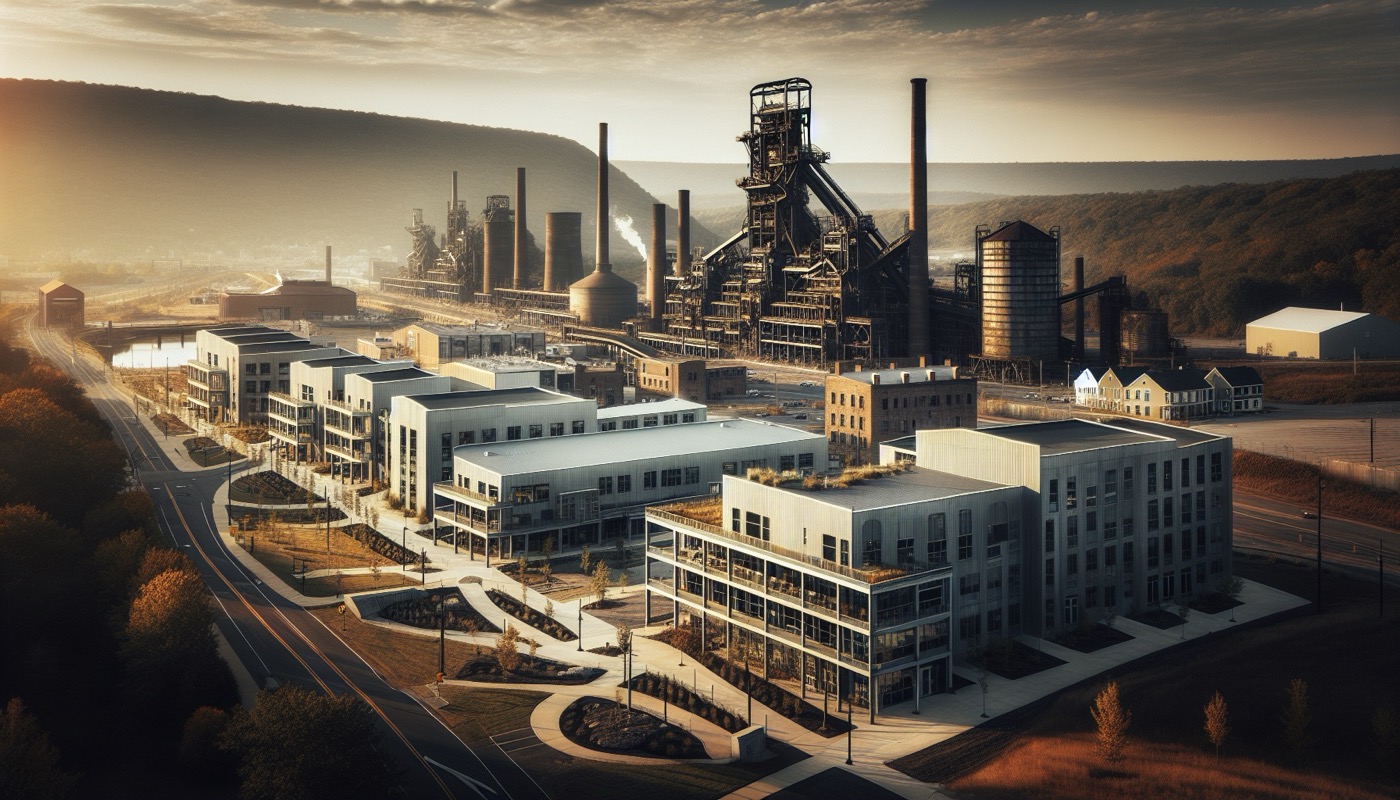
Bethlehem Steel redevelopment — the former Bethlehem Steel plant (closed 1995) has been transformed into the SteelStacks arts campus and various commercial redevelopment, with extensive brownfield work under PA Act 2 (see our Act 2 essay).
Sands Casino (now Wind Creek Bethlehem) — adjacent to the former steel plant, with Pennsylvania Gaming Control Board construction oversight similar to Atlantic City's DGE framework.
Moravian College / Lehigh University — campus-adjacent development in Bethlehem with institutional zoning overlays.
Easton
Easton, Northampton County's seat and the eastern anchor of the Lehigh Valley, operates its own permit track. Features:
Easton Historic District — colonial-era downtown around Centre Square.
Delaware River frontage — DRBC coordination on waterfront redevelopment; Delaware River Wild and Scenic designation.
Lafayette College — campus-adjacent development.
The I-78 / Route 22 logistics corridor
The east-west I-78 corridor through the Lehigh Valley is one of the East Coast's densest logistics and distribution submarkets. Major developments:
Amazon fulfillment and sortation facilities (multiple).
FedEx, UPS, Walmart, Target, and major 3PL distribution centers.
Rail-served logistics parks (Norfolk Southern Lehigh Valley Subdivision).
Industrial redevelopment of former steel, cement, and manufacturing sites.
Permitting logistics projects in the Valley typically involves:
Municipal zoning (often requiring conditional use or rezoning for large footprints).
LVPC advisory review.
County Conservation District E&S and NPDES.
Act 537 sewage planning.
PADEP Chapter 102 post-construction stormwater.
PADEP air permits (truck engine exhaust, yard operations).
PennDOT HOP for access to state routes.
Traffic impact studies driven by truck volume.
Industrial legacy and brownfield
Bethlehem Steel, Lehigh Portland Cement, various smaller heavy-industrial operations, and rail-yard parcels create pervasive contamination on Valley redevelopment sites. Coordination with Act 2 standards, HAZWOPER (see our HAZWOPER essay), and vapor intrusion mitigation is routine.
Municipal zoning approval or conditional use / special exception.
SALDO to municipality with LVPC advisory review.
Conservation District E&S and PAG-02 review.
PADEP Chapter 102 post-construction SWM.
Act 537 Planning Module if required.
PADEP air permit if applicable.
PennDOT HOP and traffic review.
Municipal building permit applications.
Brownfield remediation and Act 2 completion if applicable.
Inspections.
Certificate of Occupancy.
What this means on site
Three practical rules for the Lehigh Valley:
Municipality first — 62 municipalities across the two counties; identify jurisdiction precisely.
Logistics is the dominant pattern — I-78 / Route 22 corridor projects face specific truck-traffic, Chapter 102 stormwater, and air permit considerations.
Brownfield is common — Valley's industrial legacy pervades redevelopment; plan Act 2 coordination from pre-acquisition.
The Lehigh Valley's combination of PA's municipal UCC / MPC framework, LVPC's unique regional planning, dense logistics redevelopment, and post-Bethlehem-Steel brownfield inheritance makes it one of the more active and permit-complex construction markets in eastern PA.
Primary sources for this essay: PA UCC (Act 45 of 1999); PA MPC (Act 247 of 1968); PA Act 2 Land Recycling Program; PA Sewage Facilities Act (Act 537); PA Clean Streams Law and Chapter 102 / Chapter 105; Lehigh Valley Planning Commission FutureLV Plan; individual municipal ordinances. LVPC, Lehigh CCD, Northampton CCD, Allentown Planning, Bethlehem Planning, Easton Planning are the agency resources.