Why Maryland ESD-to-MEP Drives Site Layout, Not Just Stormwater BMPs
Environmental Site Design (ESD) to the Maximum Extent Practicable (MEP) sounds like a technical stormwater compliance phrase. It's actually the law that determines where buildings, parking, and drives go on a Maryland site. Designers who treat it as a BMP-selection exercise — picking bioretention cells or green roofs late in design — get plans rejected. This essay walks why ESD is structural, not ornamental, for Maryland projects.
What ESD-to-MEP actually requires
Maryland's Stormwater Management Act, as amended in 2007, requires that covered development projects use Environmental Site Design to the Maximum Extent Practicable before resorting to conventional structural BMPs. The implementing regulation is COMAR 26.17.02; the technical standard is the Maryland Stormwater Design Manual. The MDE Stormwater Management Program oversees statewide implementation, with most day-to-day review delegated to county and municipal programs.
The design hierarchy built into the law:
- Minimize runoff at the source. Preserve natural drainage patterns. Minimize impervious area. Disconnect rooftops, driveways, and parking from storm sewer wherever possible.
- Treat what's left with distributed ESD practices. Micro-bioretention, bioswales, green roofs, permeable pavement, disconnection-to-pervious — small practices applied throughout the site.
- Only when ESD-to-MEP is exhausted, fall back to larger structural BMPs (detention/retention ponds, sand filters, etc.).
Reviewers enforce the hierarchy. A plan that jumps to a detention pond at the outlet without documenting why each ESD practice was not practicable on the site is an incomplete plan. "We don't have room for bioretention" is not an answer; the reviewer will ask why the site is laid out in a way that doesn't leave room.
The site-layout implications
This is where designs from out-of-state teams get pushed back. In regimes without ESD-first hierarchy, the sequence tends to be: lay out the building, parking, and circulation first, then calculate stormwater demand, then design BMPs to handle that demand. That sequence puts the building first and BMPs second.
Maryland's sequence inverts that. The site layout itself is a stormwater decision. Specifically:
- Preserved natural drainage patterns constrain the building footprint. If the site's natural swales drain to the northwest, cutting them off with a building platform that blocks drainage is presumptively problematic.
- Impervious surface minimization constrains parking ratios. Parking at the zoning maximum with no reduction effort is hard to defend against ESD-to-MEP.
- Distributed BMPs take actual square footage. Micro-bioretention cells, bioswales, and tree boxes are physical spaces that have to fit into the site. They aren't magically inserted under parking late in design.
- Green roofs are site-layout decisions too. Structural capacity, drainage, and maintenance access for green roofs need to be designed into the building, not added on at the end.
- Permeable pavement affects subgrade design and wheel loads. It's a site layout and structural decision, not a paving-finish decision.
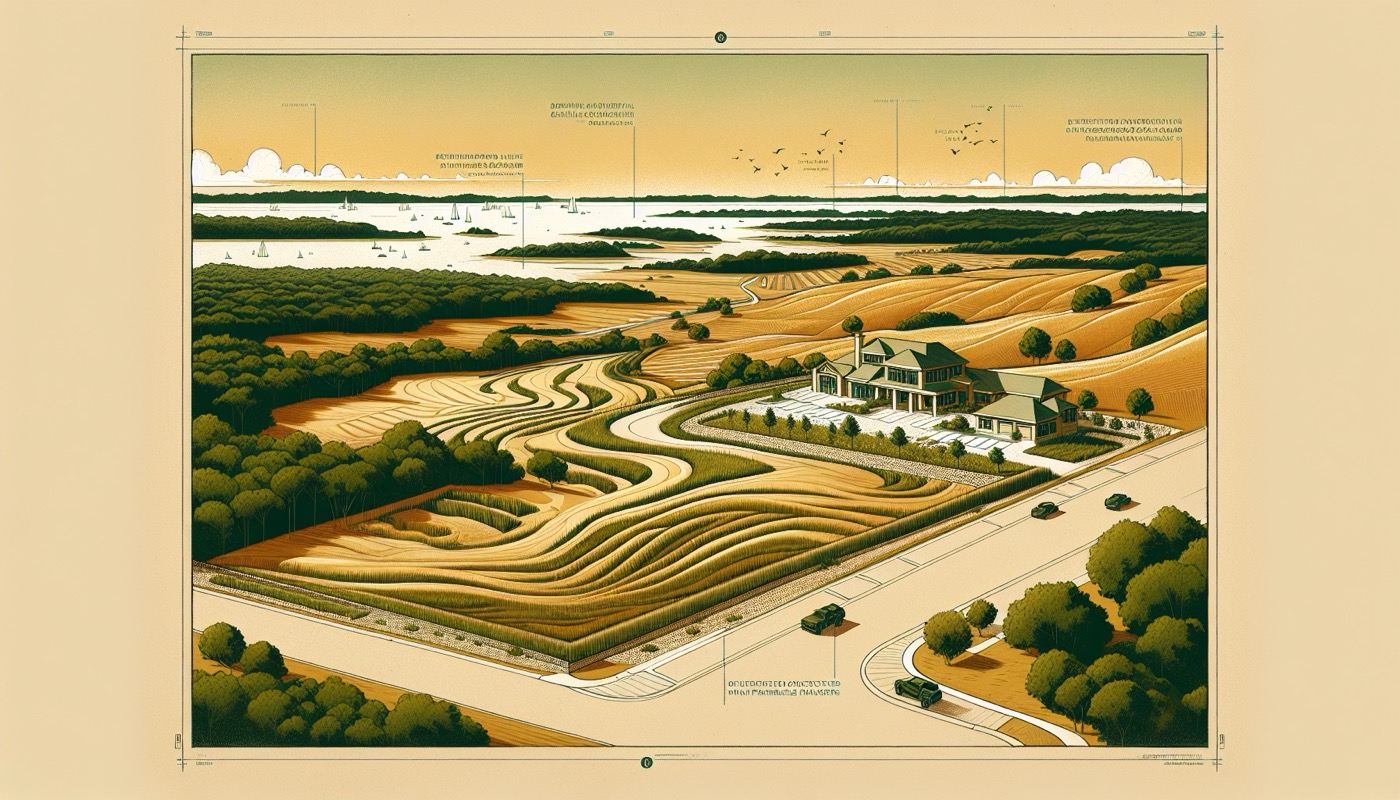
When a civil or landscape team gets ESD into the schematic design phase, the building layout often changes — perhaps a stepped building footprint to follow topography, or an alternate parking configuration to create space for distributed BMPs, or a different curb line to allow sheet flow to vegetated swales.
The documentation burden is real
Maryland's ESD-to-MEP isn't a check-the-box requirement. The design team must document why each ESD practice evaluated was or was not practicable on the specific site. "Not practicable" has to be defensible against the Design Manual's practice-specific applicability criteria, not just an assertion.
Examples of evaluation criteria reviewers expect to see addressed:
- Soil type and infiltration capacity (for micro-bioretention, rain gardens).
- Groundwater depth (for infiltration-based practices).
- Slope constraints (for vegetated swales).
- Structural capacity of the building (for green roofs).
- Utility conflicts (for tree boxes, planting areas).
- Treatment volume relative to contributing area (for distributed practice sizing).
Plans that don't document this evaluation get reviewer comments asking for it. Plans that document it but conclude "not practicable" without defensible reasoning get pushed back further.
Redevelopment vs new development
Maryland's 2007 amendments tightened redevelopment requirements meaningfully. Redevelopment projects were historically treated more leniently than new construction on stormwater. Under ESD-to-MEP as applied to redevelopment:
- Redevelopment must reduce site runoff from existing conditions, not just match.
- The reduction target is set in the Design Manual and is non-trivial.
- ESD-to-MEP applies to the redevelopment scope the same as new development.
- Sites that are being expanded or repurposed often discover the existing stormwater regime is insufficient to grandfather — the project drags the existing conditions into current compliance.
The practical implication: old strip-mall redevelopments in Maryland often end up requiring substantial ESD retrofit to get back to statutory compliance. Factor that into redevelopment financial analysis — the stormwater work can be substantial.
Delegated county programs — the real operational front
MDE sets the rules; most MD counties run MDE-approved delegated stormwater programs that do day-to-day plan review. That means the reviewer for your project is likely a Howard County, Montgomery County, or Anne Arundel County stormwater engineer — not an MDE staff member directly. Each delegated program has its own review posture, timelines, and specific local emphasis areas.
Baltimore City runs its own program. Baltimore County runs its own program. They're separate from MDE and from each other. Design teams moving from Howard County to Baltimore County should expect different review emphasis even though the underlying state rules are the same.
Design workflow that avoids rework
For Maryland projects, integrate ESD into schematic design, not design development or later:
- Pre-design site analysis. Map natural drainage, soils, groundwater, slopes, vegetation before the building goes on paper.
- Schematic design with ESD constraints visible. Site the building, parking, and circulation with natural drainage preserved and with space reserved for distributed BMPs.
- ESD practice evaluation. For each applicable practice in the Design Manual, document whether it's practicable on this site and why/why not.
- Distributed BMP layout. Size and locate practices per the Design Manual's criteria. If total treatment volume isn't achievable through distributed BMPs alone, document the deficit and move to structural BMPs for the remainder.
- Structural BMP design for the residual. Only for what ESD cannot handle.
- Submit to the delegated reviewer (county program or MDE direct) with the ESD evaluation embedded in the Stormwater Management Plan submittal.
This workflow adds weeks of upstream schematic work, often. It saves much more than that in downstream redesign.
What to do with this
If you're a designer from Pennsylvania or Virginia or elsewhere starting your first Maryland project: read the Maryland Stormwater Design Manual before you site the building. Treat ESD as a site-layout input, not as a compliance step at the end. Budget schematic design time for ESD evaluation.
If you're a developer or owner evaluating a Maryland site: factor ESD-to-MEP into feasibility analysis. Sites with difficult soils, high groundwater, or significant existing impervious cover carry real stormwater-design cost under Maryland's rules.
If you're already mid-design on a Maryland project and the reviewer has pushed back on ESD analysis: don't try to argue around it. Go back to the Design Manual and document the evaluation the reviewer is asking for. That's the path.
For primary sources and the full regulatory framework, see our Maryland Stormwater Navigator. For cross-state comparison, see our Mid-Atlantic Stormwater Compared.
About The Hive
The Hive builds tools and publishes essays for working construction and MEP professionals in the Delaware Valley and Mid-Atlantic. Primary-source-grounded, practitioner-voiced, free to use.