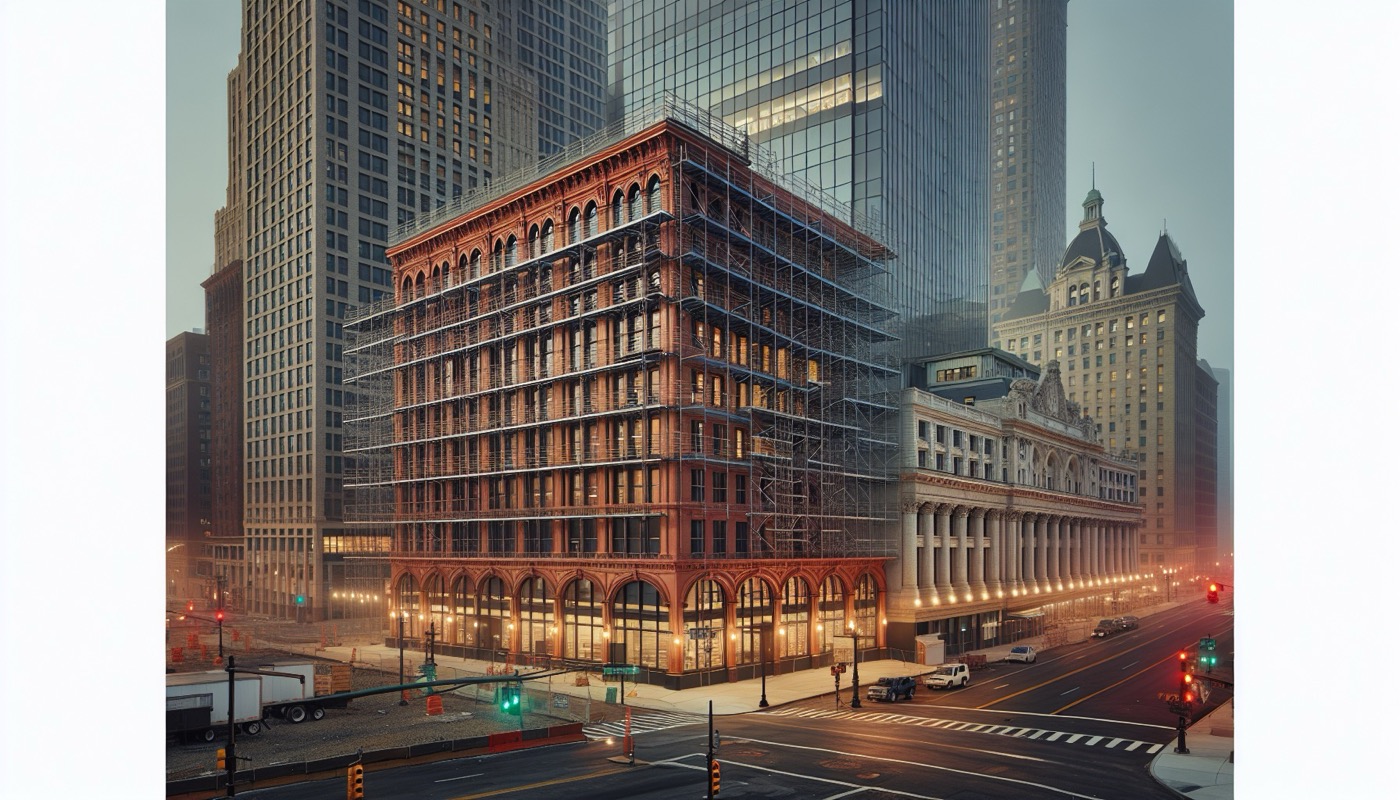
Newark is New Jersey's largest city, the state's economic anchor in the Hudson-Passaic corridor, and — thanks to several decades of large-scale downtown and waterfront redevelopment — one of the most active permit markets in the Mid-Atlantic. Construction here runs through the Department of Economic and Housing Development (EHD), its Engineering and Code Enforcement (ECE) division, the Central Planning Board and Zoning Board of Adjustment, and the Newark Landmarks Commission. The New Jersey Uniform Construction Code (UCC) governs the technical code framework, with Newark-specific zoning and procedural overlays that developers learn through experience.
New Jersey's Uniform Construction Code Act (N.J.S.A. 52:27D-119 et seq.) and the implementing regulations at NJAC 5:23 set the single statewide technical code framework. Newark, like every NJ municipality, enforces the UCC through licensed subcode officials — Building, Electrical, Plumbing, Fire Protection. The five subcode officials are the individuals who approve and inspect work in their respective disciplines; permits issue as aggregated of their discipline-specific approvals.
A Newark building permit is therefore a Construction Permit Application (CPA) that routes through the five subcodes in parallel. The CPA structure is standard New Jersey — what varies is intake procedure and supplemental Newark-specific submittal items.
Within the EHD, ECE is the division that administers construction permits and inspections. ECE intake for commercial projects typically requires:
Newark has historically operated a hybrid paper/electronic intake with substantial in-person steps for downtown projects. Schedule for intake days and subcode review times — they are not always advertised online.
Newark adopted a comprehensive Zoning and Land Use Regulations update — commonly called the 2015 (amended) ordinance — that substantially rewrote the city's zoning after decades of iterative amendments. Key features:
Discretionary land-use review runs through two bodies:
Each board meets on a monthly cadence with posted deadlines for application completeness. Most commercial projects in Newark touch one of the two boards — matter-of-right development is relatively uncommon in the more heavily-regulated overlay and corridor districts.
Much of Newark's downtown and waterfront is under redevelopment plans adopted under New Jersey's Local Redevelopment and Housing Law (LRHL) (N.J.S.A. 40A:12A-1 et seq.). Projects in redevelopment areas follow the redevelopment plan's use, dimensional, and design standards rather than the citywide zoning ordinance — and are often reviewed by the Central Planning Board in its redevelopment role.
Redevelopment areas in Newark include the downtown commercial core, Ironbound redevelopment areas, South Ward areas, and waterfront districts. Each has specific plan provisions that shape design.
The Newark Landmarks Commission, established under city ordinance, regulates exterior alterations, additions, and demolitions to designated individual landmarks and properties in designated historic districts. Newark's historic districts include James Street Commons, Lincoln Park, Forest Hill, and several others. Review runs through staff and, for substantive changes, the Commission itself.
Certificates of Appropriateness are required before ECE will issue permits for regulated exterior work on designated properties.
Newark enacted Ordinance 17-1041 (Inclusionary Zoning), effective 2017, one of the most robust municipal inclusionary regimes on the East Coast. Scope and obligations:
The Inclusionary Zoning Ordinance has materially shaped downtown residential pipelines. Developers budget inclusionary compliance at pro forma; compliance is verified at site plan approval and enforced through covenants recorded on title.
Many Newark redevelopment sites are industrial or former-industrial parcels subject to NJDEP Industrial Site Recovery Act (ISRA) review on transfer or closure, and to cleanup obligations under the Site Remediation Reform Act with Licensed Site Remediation Professional (LSRP) oversight. Construction plans on contaminated sites must integrate with the Remedial Action Workplan (RAW) — vapor intrusion mitigation, cap design, groundwater monitoring, and Deed Notice restrictions.
A developer acquiring a Newark industrial parcel typically runs Phase I / Phase II ESA, coordinates with an LSRP, and plans for the RAW implementation in parallel with construction permitting. See our NJ SRRA essay.
Newark's Department of Public Works administers right-of-way permits for curb cuts, sidewalks, driveway aprons, and temporary street occupation. Utility coordination with PSE&G (electric and gas), the Newark Watershed Conservation and Development Corporation / Newark Water and Sewer Utility, and private telecommunications carriers runs alongside the permit. Large projects often need a staging/ROW MOT plan approved by DPW and the Newark Police Department's traffic division.
The Fire Subcode Official is one of the five UCC subcodes but Newark's Division of Fire Prevention also administers operational permits (hazardous operations, tanks, places of assembly). Large projects typically coordinate building-permit-stage Fire Subcode review with Fire Prevention operational approvals separately.
Three practical rules for Newark:
Newark is not Jersey City, is not Hoboken, is not the tri-county Essex suburbs. Each NJ city has its own zoning and procedural character within the UCC baseline. Read the 2015 Zoning and Land Use Regulations (as amended) and the applicable redevelopment plan before scheming design.
Primary sources for this essay: New Jersey Uniform Construction Code Act (N.J.S.A. 52:27D-119 et seq.) and NJAC 5:23; Newark Zoning and Land Use Regulations (2015, as amended); Newark Ordinance 17-1041 (Inclusionary Zoning); N.J.S.A. 40:55D (Municipal Land Use Law); N.J.S.A. 40A:12A (Local Redevelopment and Housing Law); N.J.S.A. 58:10B (Site Remediation Reform Act); Newark Landmarks Commission ordinance. The City of Newark EHD and ECE websites host current intake checklists and applications.