Every construction project where workers may be exposed to atmospheric hazards — respirable crystalline silica, asbestos under the NESHAP and OSHA standards, lead, mold, welding fume, diesel exhaust, or hazardous chemicals — runs through OSHA's Respiratory Protection Program standard at 29 CFR 1910.134. The standard applies to construction through incorporation in 29 CFR 1926.103. It is not a stand-alone hazard rule; it is the framework every OSHA hazard-specific rule (silica, asbestos, lead, HAZWOPER, hazardous atmospheres) bolts onto when respirator use becomes a control measure.
Missed documentation and procedural shortfalls in the respiratory protection program are among the most-cited construction safety violations every year. The standard is specific; the documentation it requires is substantial; and there is no equivalent respirator standard that replaces it for construction.
OSHA's hierarchy of controls prefers engineering controls over respirators. A respirator is a Last Resort PPE under most OSHA standards:
Whenever employees are required to use respirators, the employer must implement a written Respiratory Protection Program. "Voluntary use" of respirators by employees — where the employer has not determined respirators are necessary — is subject to a narrower set of requirements (see Appendix D below).
Under paragraph (c), the written program must address:
A Program Administrator must be identified — qualified by appropriate training or experience to administer or oversee the program and conduct required evaluations.
Before respirator selection, the employer must conduct a hazard assessment — identifying the contaminant(s), concentration (measured or estimated using objective data), route of exposure, and duration. The assessment drives respirator selection.
Selection criteria from paragraph (d):
The correct match of contaminant, concentration, APF, and cartridge type is a technical question. The Program Administrator or a qualified safety professional makes the call.
Before fit testing or respirator use, employees must undergo medical evaluation to determine fitness. Under paragraph (e):
Medical evaluation is at no cost to the employee and at a reasonable time and place.
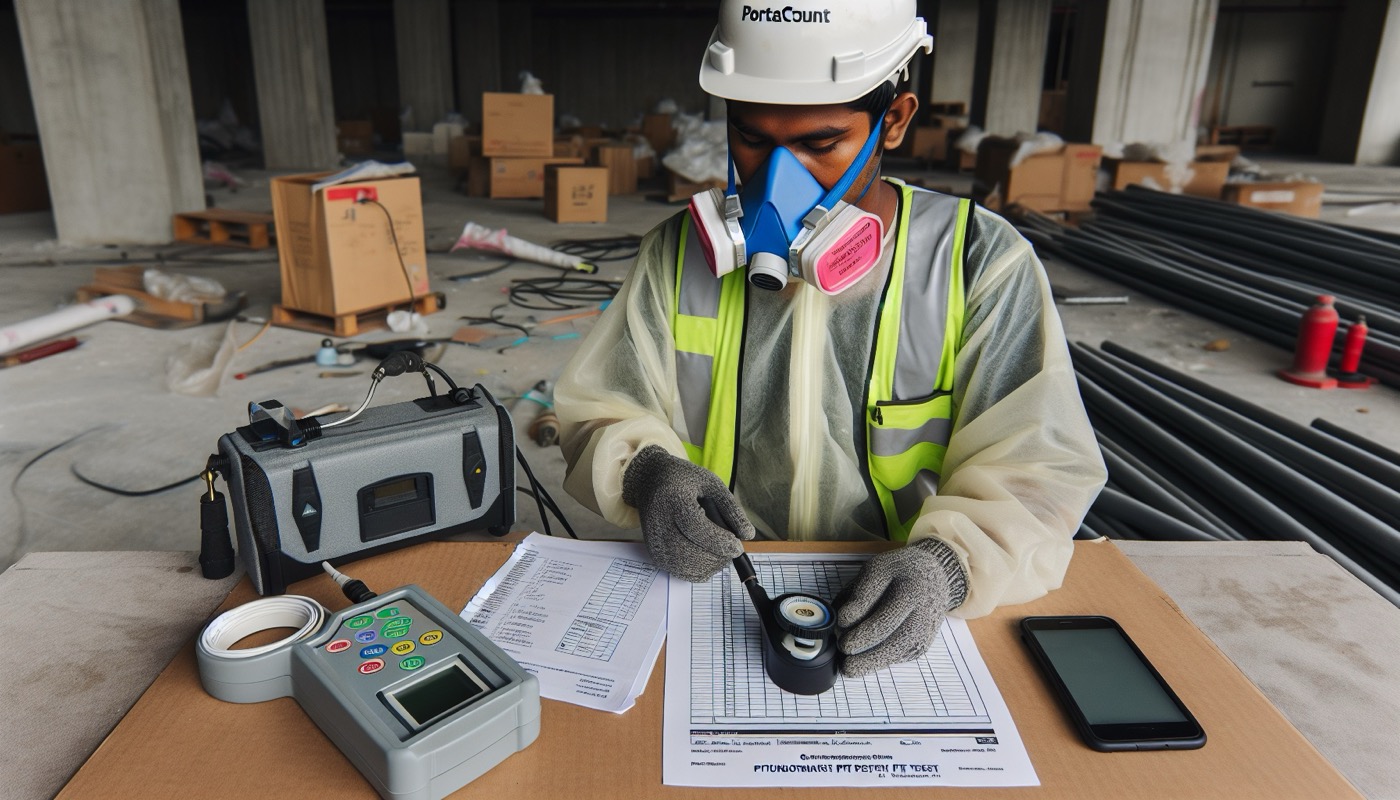
Tight-fitting respirators (half-mask and full-facepiece air-purifying or supplied-air) require annual fit testing to verify a proper seal to the wearer's face.
Two fit-test methods:
Fit testing is conducted at initial assignment, annually thereafter, and whenever there is a change in facial features or weight that could affect fit. The fit test is performed with the same make, model, style, and size of respirator the employee will use.
Facial hair — beard stubble that interferes with the sealing surface — disqualifies tight-fitting respirator use. Loose-fitting PAPRs are an alternative for bearded workers.
Before each use, employees perform a user seal check — positive-pressure and negative-pressure checks, or the manufacturer-recommended check — to confirm the respirator is sealing on that day. User seal check is a daily discipline; it does not substitute for annual fit testing.
For air-purifying respirators with gas/vapor cartridges, the employer must implement a change schedule based on objective information about the contaminant's breakthrough time. The change schedule must be in writing in the Program and communicated to users.
Options for establishing the change schedule:
For particulate filters (P100, N95, etc.), change is typically based on increased breathing resistance or damage.
Annual training — and whenever the program changes or a new employee uses a respirator — on:
Training is documented with content, date, attendees, and trainer qualifications.
When employees wear respirators that the employer has not determined to be necessary — voluntary use — the employer's obligations are narrower:
Voluntary use of tight-fitting half-mask or full-facepiece respirators does trigger the medical evaluation requirement.
Many OSHA substance-specific rules incorporate 1910.134 by reference and add additional respirator-specific provisions. Examples:
The respiratory protection program covers all respirator use across all standards; the hazard-specific rules add selection and exposure criteria on top.
Three practical rules:
The Respiratory Protection Program is the backbone of construction respiratory safety. Whether the task is demolition of an asbestos-containing roof, concrete cutting, lead-paint renovation, or entry into a confined space with a hazardous atmosphere, the same written program, medical evaluation, fit test, and training apply. Build the Program once; apply it across every respirator user on every project.
Primary sources for this essay: 29 CFR 1910.134 (General Industry); 29 CFR 1926.103 (Construction, incorporating 1910.134); OSHA Respiratory Protection Program Appendices A (fit test protocols), B-1 (user seal check procedures), B-2 (respirator cleaning), C (medical evaluation questionnaire), D (voluntary use information); NIOSH Respirator Certification Lists and 42 CFR Part 84; OSHA's Small Entity Compliance Guide for the Respiratory Protection Standard.