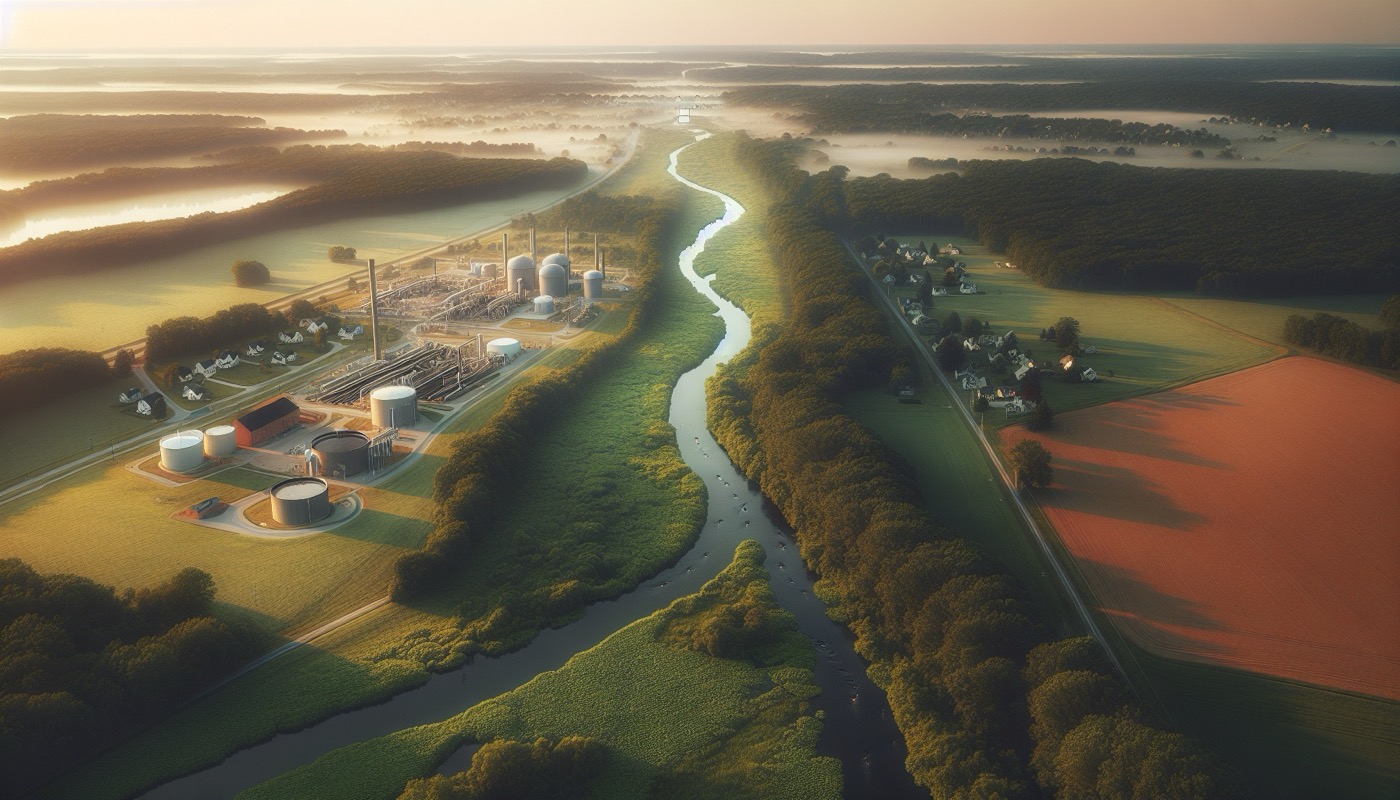
Every state stormwater essay in this library — Maryland ESD-to-MEP, Virginia VSMP, Delaware RPv, DC's 1.2-inch retention rule — shares a single upstream driver: the Chesapeake Bay Total Maximum Daily Load. Adopted by EPA in December 2010, the Bay TMDL is the largest and most consequential TMDL in the country. It assigns nitrogen, phosphorus, and sediment load reductions to the six Bay-watershed states (Maryland, Virginia, Pennsylvania, Delaware, New York, West Virginia) and the District of Columbia, and it shapes almost every post-construction stormwater rule in the region.
A developer who understands why a Maryland SWM plan has to meet a specific nitrogen number, or why a Virginia MS4 is retrofitting every subdivision built before 2000, is a developer who is reading from the TMDL downstream. This essay walks that framework.
A Total Maximum Daily Load is a Clean Water Act § 303(d) obligation: for waters that cannot meet water-quality standards through technology-based controls alone, the state identifies the water as impaired, develops a TMDL, and allocates the load among point and nonpoint sources. The TMDL is the quantitative cap on how much of a pollutant can enter the water while meeting standards.
For the Chesapeake Bay, the 2010 Bay TMDL (EPA Region 3, December 29, 2010) addresses nitrogen, phosphorus, and sediment — the three nutrients/particulates driving Bay dissolved-oxygen and water-clarity violations. The TMDL:
The TMDL is enforceable against states through the NPDES permit program: EPA will not approve state NPDES permits that authorize discharges exceeding TMDL allocations.
Each state produces Watershed Implementation Plans — the state-specific blueprints for how the state will meet its TMDL allocations. Three WIP phases:
WIPs are not themselves legally binding on dischargers — they are state plans — but the WIP commitments translate into state-specific permit conditions, MS4 retrofit obligations, agricultural cost-share programs, and upgraded wastewater plant effluent limits.
Every Mid-Atlantic state with significant Bay-watershed area runs Phase I or Phase II MS4 permits (Municipal Separate Storm Sewer System) for its urban and suburban jurisdictions. Under post-TMDL permits, MS4s carry quantified pollutant-load reduction obligations. The MS4 operator (county, city, MDOT SHA for state roads) must:
Retrofit acreage obligations are substantial. Montgomery County's MS4 permit, for example, commits to retrofitting stormwater on thousands of acres of previously-unmanaged impervious area across the permit term.
New development in the Bay watershed must meet post-construction performance standards designed to produce TMDL-consistent loads. State specifics differ but share the direction:
Wastewater treatment plants (WWTPs) in the Bay watershed have received TMDL allocations that are substantially below historic effluent concentrations. States and wastewater authorities have spent billions to upgrade plants to meet the allocations — Biological Nutrient Removal and Enhanced Nutrient Removal are now standard in the watershed. New development connecting to a capacity-constrained WWTP may face hookup moratoria or be required to contribute to a nutrient offset or trading program to demonstrate load neutrality.
Several states have stood up nutrient-trading programs that allow dischargers to offset loads through third-party reductions. Virginia's Nutrient Credit Registry is the most active — wastewater plants, developers, and MS4 operators can buy credits from agricultural BMPs, stream restorations, and forest planting projects. Maryland's Nutrient Trading Program operates similarly. Trading is how new development load is reconciled with allocated limits that leave no room for growth.
Pennsylvania has been the state most frequently flagged by EPA for failing to meet its Bay TMDL obligations, particularly in the agricultural sector and in Phase III WIP implementation. Pennsylvania's Chesapeake Bay Office has ramped up programs and funding in response, but the state remains the watershed's largest load contributor and the greatest risk to reaching the 2025 targets.
For developers in Pennsylvania's Bay watershed (which covers roughly half the state, from the Susquehanna headwaters down through Lancaster and York), the practical consequence is heightened scrutiny of stormwater plans, more demanding post-construction requirements under Chapter 102, and an expanded role for the Susquehanna River Basin Commission and county conservation districts in review.
EPA's 2017 midpoint assessment found significant progress but flagged shortfalls — particularly in agricultural nonpoint sources. The 2025 deadline will not be met across all states and all allocations. The Chesapeake Bay Agreement's Chesapeake Executive Council and EPA have begun planning the post-2025 framework, which will likely extend TMDL obligations under revised milestone schedules and updated Phase IV WIPs.
For construction, the regulatory consequence is that Bay-watershed post-construction stormwater rules are likely to get tighter, not looser, in the post-2025 era. Expect:
The Bay TMDL is upstream of every Bay-watershed stormwater rule. Three practical implications:
For developers and civil engineers in the Bay watershed, reading the current Phase III WIP and the local MS4 permit provides an operating map of why the post-construction stormwater numbers are where they are, and where they are going.
Primary sources for this essay: Chesapeake Bay TMDL (EPA Region 3, December 29, 2010); Clean Water Act § 303(d); state Watershed Implementation Plans (Phase I 2010, Phase II 2012, Phase III 2019); Chesapeake Bay Agreement (2014) and Chesapeake Executive Council milestones; state MS4 permits (Maryland MS4 General Permit, Virginia MS4 permits, DC MS4 permit, etc.); state nutrient-trading registries. EPA ChesapeakeStat is the public data portal.