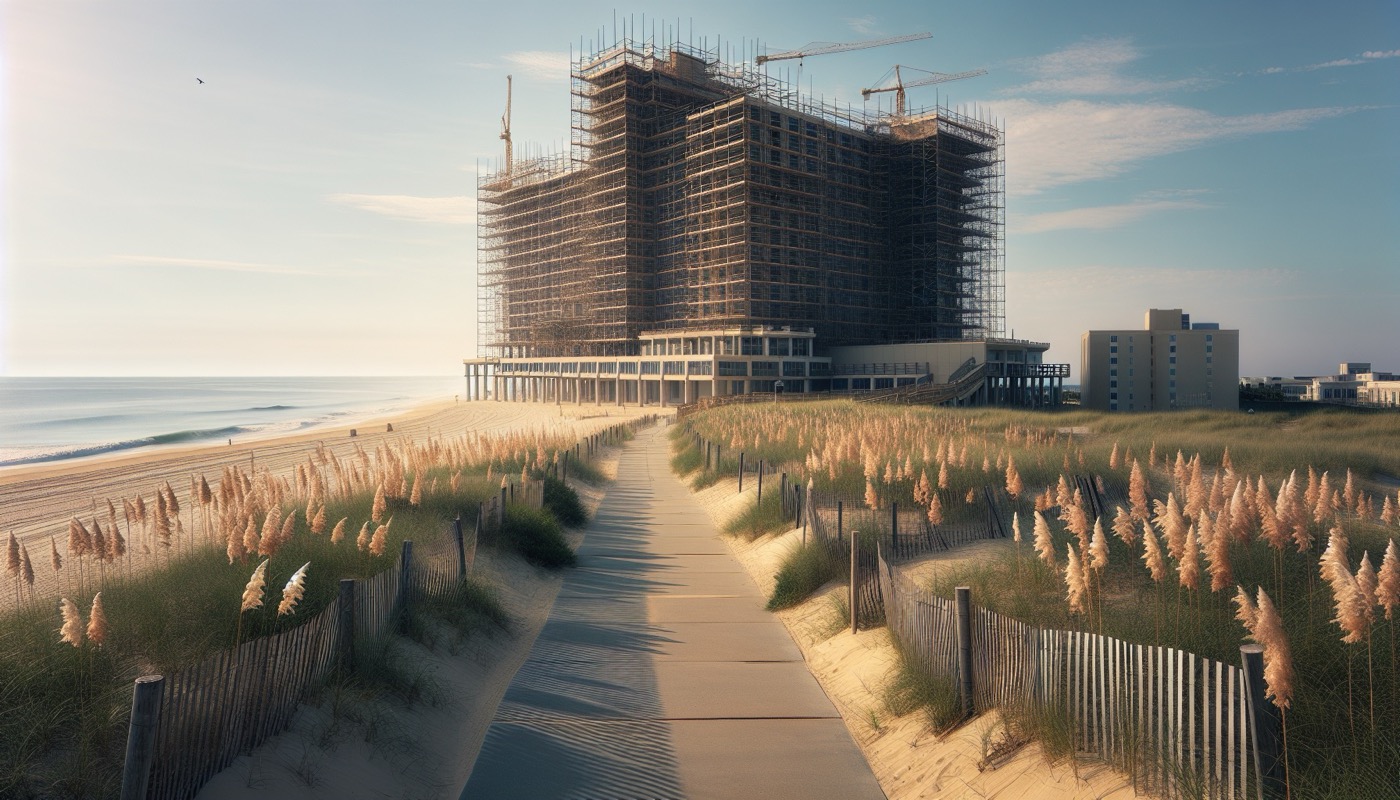
Virginia Beach is the largest city in Virginia by population, one of the longest continuous stretches of coastal urban development on the East Coast, and home to Naval Air Station Oceana, the Navy's master jet base. Permitting in Virginia Beach threads four constraint systems at once: the Chesapeake Bay Preservation Act 100-foot buffer, the city's Sea Level Rise ordinance and local floodplain requirements, AICUZ (Air Installation Compatible Use Zones) governing development compatibility with Navy flight operations, and the city's Green Line preserving the agricultural south.
The city's permit workflow uses two primary agencies:
Plans submit through the city's online permit portal. For commercial projects, the zoning/planning approval precedes the building permit — a pattern common across Virginia jurisdictions and required by the Dillon Rule's channeled local authority.
Virginia Beach's zoning is administered through the City Zoning Ordinance (CZO). Key districts include:
The Comprehensive Plan — updated periodically, most recently in 2016 with ongoing amendments — designates Strategic Growth Areas (SGAs), including Town Center, Pembroke, Burton Station, and the Resort Area. SGAs are the planned-density corridors where infill and redevelopment are encouraged.
Rezonings and Conditional Use Permits (CUPs) route through the Planning Commission (advisory) and City Council (final action). Hearings, Chapter 527 TIAs where applicable, and CBPA determinations are integrated into the approval package.
Virginia Beach is one of the 84 Tidewater localities subject to the Chesapeake Bay Preservation Act (Va. Code § 62.1-44.15:67 et seq.). The CBPA establishes the:
Development within the 100-foot buffer is generally prohibited, with narrow exceptions for water-dependent facilities, necessary infrastructure, redevelopment under specific conditions, and permitted encroachments requiring a Chesapeake Bay Preservation Area Board review. See our CBPA essay for the full framework.
The CBPA buffer in Virginia Beach substantially shapes waterfront parcel development — Lynnhaven River, Chesapeake Bay, Back Bay, and their tributaries are extensive, and most coastal parcels have an RPA component.
Virginia Beach has been a national leader in integrating projected sea level rise into construction standards. The city's Sea Level Rise and Recurrent Flooding response includes:
Combined with the CBPA buffer, the net effect on waterfront site design is substantial: reduced development envelope from RPA, elevated lowest floors from SFHA, enhanced stormwater performance from city standards. See our FEMA Floodplain Construction essay.
The Air Installation Compatible Use Zones (AICUZ) program at NAS Oceana and Naval Auxiliary Landing Field Fentress establishes Navy-defined zones around the airfields:
Virginia Beach adopted AICUZ overlays into the zoning ordinance in the 2005-2006 era after the Navy considered closing NAS Oceana (which would have been economically devastating). The compromise was the city's commitment to manage encroachment. AICUZ overlays are enforced as part of normal zoning review — a residential rezoning in the 65+ dB noise contour faces strong policy presumption against, and some uses are flatly prohibited in APZ zones.
Virginia Beach's Green Line — an urban growth boundary adopted in the 1980s — separates the denser northern urban area from the southern agricultural reserve. Below the Green Line, rural zoning, ARP (Agricultural Reserve Program) easements, and large-lot residential predominate. Development in southern Virginia Beach runs counter to the Green Line presumption and is politically and procedurally difficult.
The Green Line is not a hard legal prohibition; it is an adopted policy that shapes zoning decisions. Rezonings below the Green Line typically fail at the Planning Commission or Council.
The Resort Area along Pacific Avenue and Atlantic Avenue — the Oceanfront — has its own planning framework, the Resort Area Strategic Action Plan, with form-based design standards, hotel redevelopment incentives, and streetscape design guidance. Oceanfront projects coordinate with the Resort Area Advisory Commission and follow RASAP massing, setback, and material standards.
Additional Oceanfront layers:
Water and sewer are administered by the city's Department of Public Utilities (DPU), which operates its own water treatment, distribution, and wastewater collection. DPU coordinates with Hampton Roads Sanitation District (HRSD) for regional wastewater treatment and Norfolk DPU for some regional water supply arrangements.
Projects require DPU service applications, capacity confirmations, and connection permits. Large commercial and mixed-use projects undergo extensive DPU engineering review.
Virginia Beach is one of the few Virginia jurisdictions that maintains its own local roads (under the urban road maintenance exception similar to Henrico and a few others). City road permits are issued by the city DPW; state-maintained routes (I-264, US 58, Route 44 / Norfolk Virginia Beach Expressway, some arterials) run through VDOT. Access permits and Chapter 527 TIAs apply for state-road-impacting projects.
Three practical rules for Virginia Beach:
Virginia Beach combines a Dillon-Rule statewide building code with some of the most sophisticated coastal and military-encroachment overlays in the Mid-Atlantic. Permit predictability at the USBC level is high; land-use entitlement and overlay compliance is where projects live or die.
Primary sources for this essay: Virginia Beach City Code (Zoning Ordinance, Site Plan Ordinance, Subdivision Ordinance); Virginia USBC (13VAC5-63); Chesapeake Bay Preservation Act (Va. Code § 62.1-44.15:67 et seq.) and local implementing ordinance; AICUZ Navy guidance and Virginia Beach AICUZ overlay district; Virginia Beach Comprehensive Plan and Strategic Growth Area plans; Resort Area Strategic Action Plan; Virginia Beach Sea Level Rise and Recurrent Flooding studies and associated ordinances; Hampton Roads Planning District Commission studies. City Planning Department, Permits and Inspections, DPU, and DPW are the agency resources.