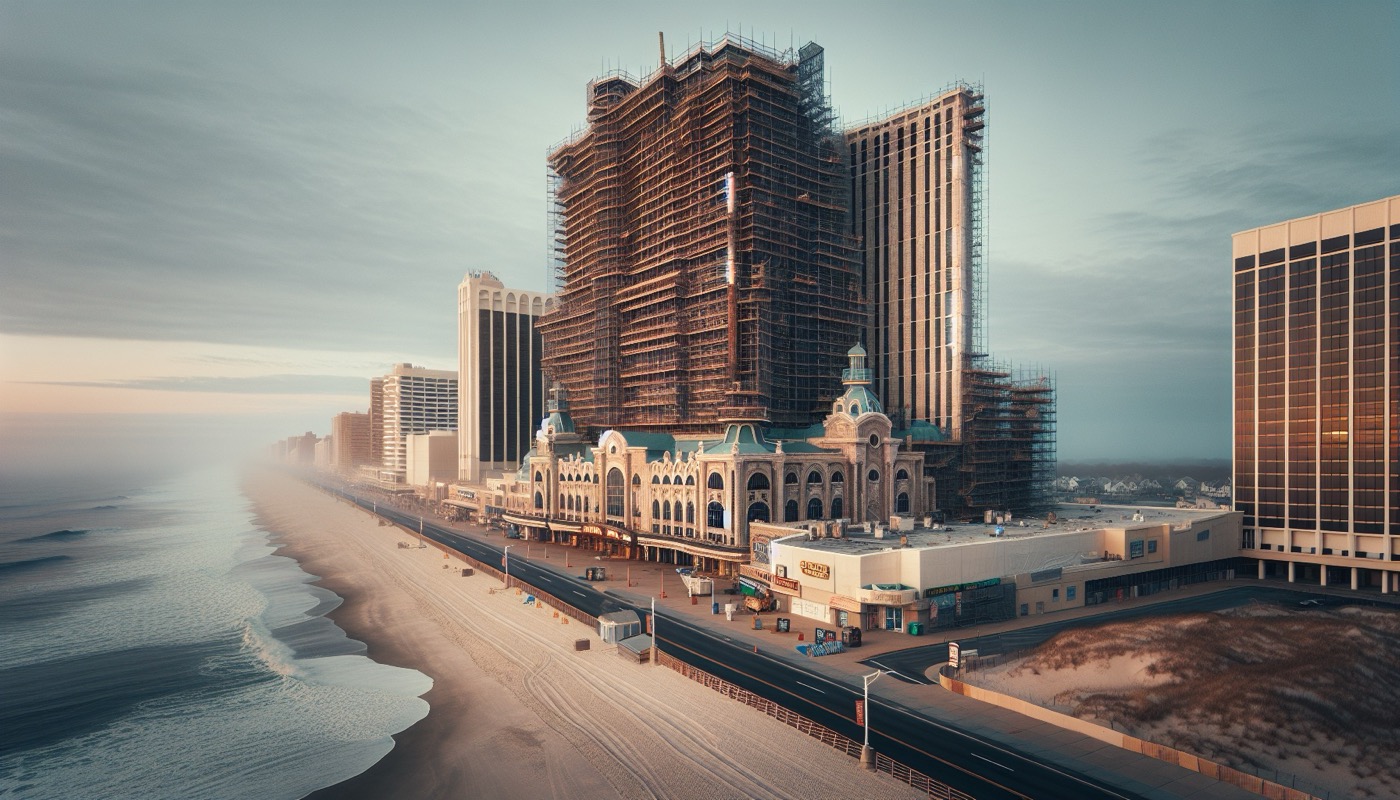
Atlantic City is one of the most regulated permit environments in New Jersey — a shore resort city where casino-resort redevelopment, post-Sandy coastal resilience, CAFRA coastal permits, historic district review, and the standard UCC subcode permit framework all converge on the same project. A new hotel tower, boardwalk casino renovation, or apartment redevelopment here runs through four to six agencies in parallel. The Casino Reinvestment Development Authority (CRDA), the NJDEP Division of Coastal Engineering, the City of Atlantic City Construction Department, and the Planning Board / Zoning Board are the main gates, with state-level casino regulation, NFIP flood compliance, and municipal historic review adding further layers.
Atlantic City, like every New Jersey municipality, enforces the NJ Uniform Construction Code (N.J.S.A. 52:27D-119 et seq., NJAC 5:23) through licensed subcode officials. The city's Construction Department houses the Building, Electrical, Plumbing, Fire, and Elevator subcodes. Permits are Construction Permit Applications (CPAs) submitted to the department with technical sections for each subcode.
See our NJ Contractor Licensing essay for the separate contractor-licensing regime that applies to businesses working in the city.
In 2011, the New Jersey Legislature enacted the Atlantic City Tourism District Act (L. 2011, c. 18) designating a large portion of the city — the boardwalk corridor, the marina district, and the adjacent areas — as the Atlantic City Tourism District. Within the Tourism District, the Casino Reinvestment Development Authority (CRDA) — a state agency — exercises the land-use authority normally held by the municipality.
Practical consequences:
Developers need to verify whether the project site is within the Tourism District. If it is, CRDA is the primary land-use agency. If not, city boards. Both regimes ultimately route back to the city Construction Department for UCC permits.
For casino-specific construction:
Casino-specific construction is not a typical commercial build. Permitted contractors, vetted subcontractors, and specific security requirements (surveillance coverage, vault design, count-room standards) apply. These are administered by DGE alongside the standard UCC subcode permit process.
Atlantic City sits entirely within the Coastal Area Facility Review Act (CAFRA) zone (N.J.S.A. 13:19-1 et seq.). Any development in the CAFRA zone above specified thresholds requires a CAFRA permit from NJDEP's Coastal Zone Management program, administered under the Coastal Zone Management Rules (N.J.A.C. 7:7). Thresholds:
CAFRA permits address coastal-resource impacts, siting relative to erosion hazard areas, and the Coastal Zone Management Program's policy framework. See our NJ CAFRA essay.
Hurricane Sandy (2012) hit Atlantic City hard. Post-Sandy NJDEP rule updates and FEMA FIRM revisions substantially changed construction requirements for the city:
Nearly every beachfront, boardwalk-adjacent, or low-lying parcel in Atlantic City faces V-zone or Coastal A Zone treatment. See our FEMA Floodplain Construction essay.
Atlantic City has designated historic districts including Ducktown, Northeast Inlet, and portions of the boardwalk area. Exterior alterations, demolitions, and new construction in designated districts face municipal historic review (and CRDA historic coordination inside the Tourism District where applicable).
Federal-nexus projects (HUD, FEMA-grant-funded, etc.) trigger Section 106 NHPA review in coordination with the NJ SHPO.
Atlantic City has legacy industrial, fuel-storage, and dry-cleaning parcels that frequently require remediation before redevelopment. Under New Jersey's Site Remediation Reform Act and the LSRP program (see our NJ SRRA/ISRA essay), contaminated-site redevelopment follows the state's remediation framework with LSRP oversight. ISRA may apply on industrial transfers.
Atlantic City's status as a Mount Laurel-compliant community, plus periodic Fair Housing Act settlements, shape affordable-housing obligations on residential development. Recent state interventions (including Atlantic City's emergency management period under the Municipal Stabilization and Recovery Act) have affected the regulatory environment; developers should verify current obligations at project initiation.
Three practical rules:
Atlantic City is a case study in overlapping regulation. The UCC gives technical predictability; everything else — CRDA, CAFRA, DGE, post-Sandy flood, historic — layers on top. For casino and boardwalk projects, plan the entitlement calendar separately from the construction calendar, and expect multi-agency coordination from schematic through occupancy.
Primary sources for this essay: Atlantic City Tourism District Act (L. 2011, c. 18); CRDA Tourism District Land Use Regulations; NJ Uniform Construction Code (N.J.S.A. 52:27D-119 et seq.); Coastal Area Facility Review Act (N.J.S.A. 13:19-1 et seq.); Coastal Zone Management Rules (N.J.A.C. 7:7); Flood Hazard Area Control Act Rules (N.J.A.C. 7:13); NJ Casino Control Act and DGE regulations; NJ Site Remediation Reform Act; FEMA FIRMs for Atlantic County. The Atlantic City Construction Department, CRDA, NJDEP, and DGE are the agency resources.