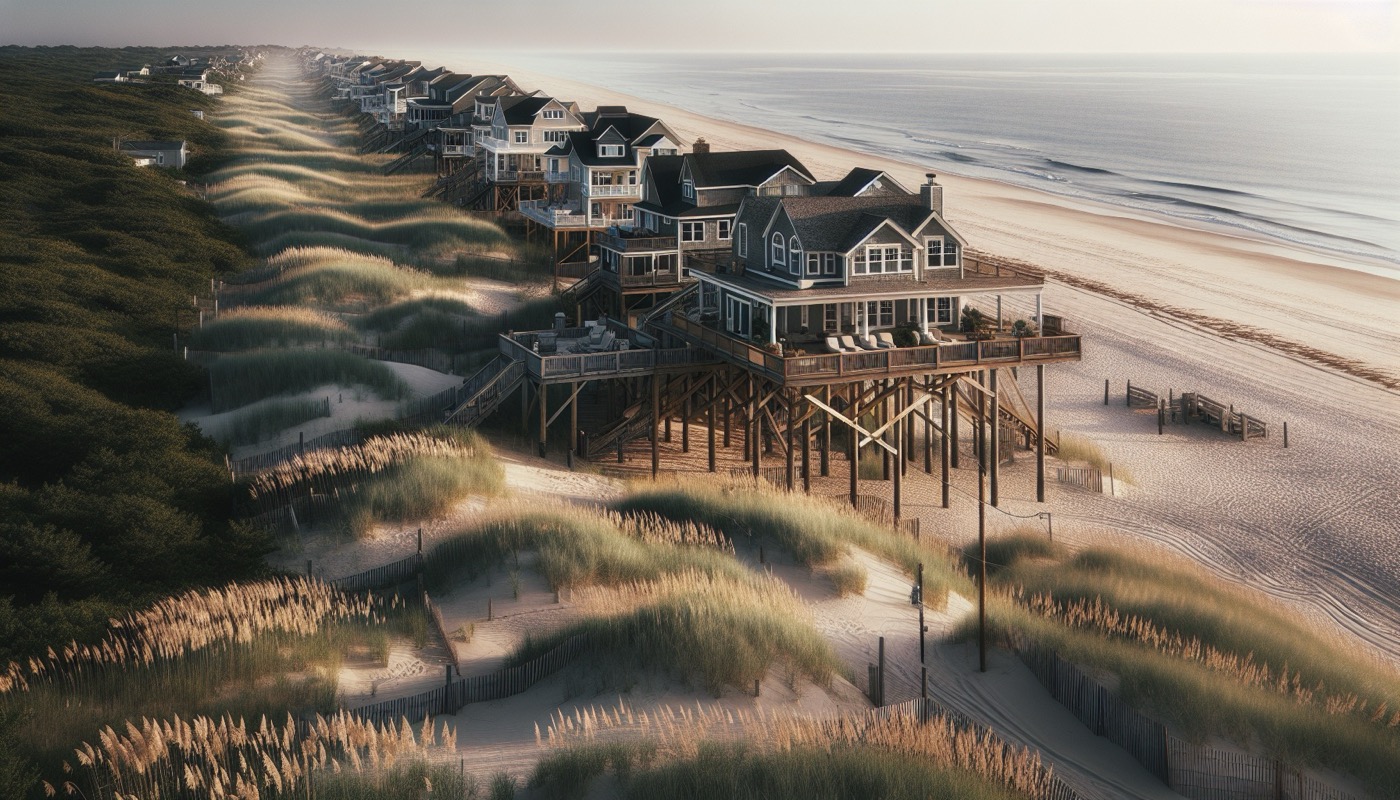
Monmouth County occupies the northern Jersey Shore — from the Raritan Bayshore (Highlands, Keansburg, Union Beach) through the ocean beachfront communities (Sea Bright, Long Branch, Asbury Park, Belmar, Spring Lake) to the inland townships (Middletown, Holmdel, Freehold, Colts Neck, Howell). The county combines Atlantic coastal / shore economics, post-Sandy flood resilience, major redevelopment at Fort Monmouth (closed in 2011 BRAC), and a large commuter workforce reaching NYC via ferry, NJ Transit North Jersey Coast Line, and bus. Permitting follows the NJ UCC municipal framework with significant overlay regulation.
Monmouth has 53 municipalities — townships, boroughs, and two cities (Asbury Park and Long Branch). Each operates its own Construction Office under the NJ UCC with five subcodes. Zoning, subdivision, and site plan review run through municipal boards.
The Monmouth County Planning Board provides advisory review of municipal subdivisions and site plans that affect county roads or county drainage. Monmouth maintains a substantial network of county roads, so Planning Board approval is frequently required for access.
The entire Atlantic shoreline and much of the Raritan Bayshore of Monmouth County is within the Coastal Area Facility Review Act (CAFRA) zone. See our NJ CAFRA essay. Projects above thresholds require a CAFRA permit from NJDEP's Coastal Zone Management program.
Additional state-coastal regulation applies through:
Hurricane Sandy devastated the Monmouth shoreline in 2012. Post-Sandy, substantial rebuild and elevation activity has reshaped the coastal building stock. NJDEP's updated Flood Hazard Area Control Act Rules (N.J.A.C. 7:13) impose freeboard and design flood elevation requirements; FEMA 44 CFR 60.3 and ASCE 24 govern technical flood-resistant design.
The RREM (Reconstruction, Rehabilitation, Elevation, and Mitigation) program and subsequent HUD CDBG-DR funding drove thousands of Monmouth home elevations post-Sandy. See our NJ HIHEC essay for the home-elevation contractor regulatory framework.
Fort Monmouth — the Army's historic C4ISR and communications-electronics base — closed in 2011 under BRAC 2005. The Fort Monmouth Economic Revitalization Authority (FMERA), a state-created authority, administers redevelopment of the 1,126-acre former base across Eatontown, Oceanport, and Tinton Falls. FMERA projects include:
Developers of FMERA-subject parcels coordinate with the authority in addition to standard municipal permits.
The City of Asbury Park has undergone substantial downtown and waterfront revitalization. Its historic district, boardwalk area, and waterfront redevelopment plan shape project approvals. The City of Long Branch has similar waterfront redevelopment dynamics.
Smaller shore towns — Sea Bright, Bradley Beach, Belmar, Spring Lake, Manasquan — each run their own permits with distinctive flood / coastal ordinances and, in several, historic preservation overlays.
The Raritan Bayshore (Highlands, Atlantic Highlands, Keansburg, Union Beach, Keyport, Matawan-Aberdeen, Old Bridge adjacency) serves NYC commuters through NY Waterway ferry from Highlands / Atlantic Highlands and NJ Transit North Jersey Coast Line from Matawan, Middletown, Red Bank, Little Silver, Long Branch, and other stations. TOD projects near rail stations face municipal zoning with transit-supportive provisions.
Three practical rules for Monmouth:
Monmouth's combination of shore tourism economy, post-Sandy resilience focus, Fort Monmouth redevelopment, and NYC-commuter density produces one of NJ's most regulatory-complex coastal construction environments.
Primary sources for this essay: NJ UCC (N.J.S.A. 52:27D-119 et seq.); NJ Municipal Land Use Law (N.J.S.A. 40:55D); Coastal Area Facility Review Act (N.J.S.A. 13:19-1 et seq.); Coastal Permit Rules (N.J.A.C. 7:7); Flood Hazard Area Control Act Rules (N.J.A.C. 7:13); Fort Monmouth Economic Revitalization Authority (N.J.S.A. 52:27I); Pinelands Protection Act (N.J.S.A. 13:18A-1 et seq.) where applicable. Monmouth County Planning Board, FMERA, NJDEP, and individual municipal departments are the agency resources.