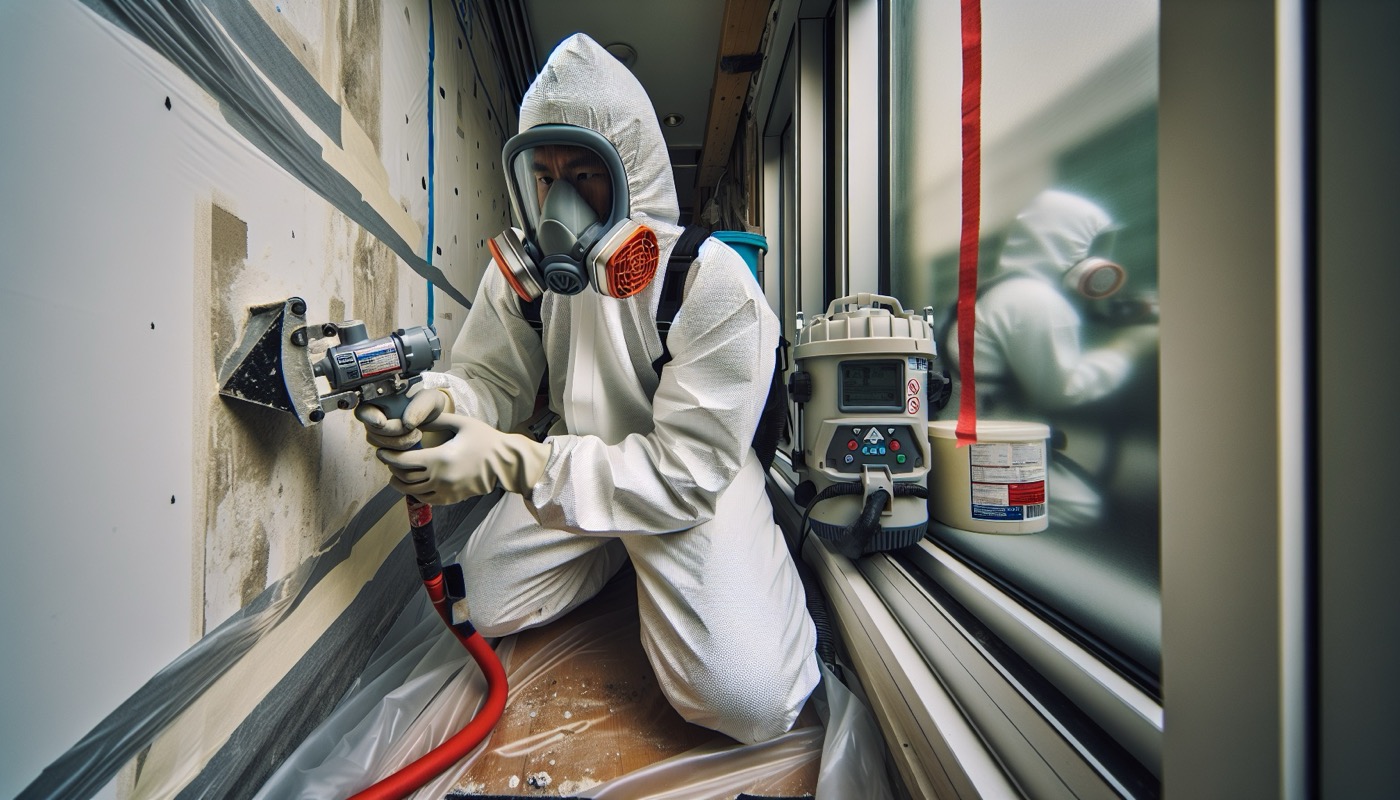
Anyone working on a pre-1978 building in the Mid-Atlantic should assume lead paint is present until proven otherwise. The EPA's Renovation, Repair, and Painting (RRP) rule governs consumer-facing notification and work-practice standards; the OSHA Lead in Construction standard at 29 CFR 1926.62 governs worker protection for the same work. The two rules apply concurrently; neither substitutes for the other. OSHA 1926.62 is triggered by exposure, not by the building's age or the project's nature — but in practice, any lead-paint project, lead-coated-steel demolition, or bridge repainting is covered.
Two numeric exposure levels govern the standard:
These values have not changed since the standard's 1993 issuance. Current medical opinion considers these levels high relative to true health-protective thresholds; some jurisdictions (California) have lowered state-analog levels. The federal OSHA standard at 1926.62 remains the governing floor.
A key feature of 1926.62 is the trigger task framework at paragraph (d)(2). Specified tasks are presumed to produce exposure at or above the PEL unless the employer has objective data to the contrary. For each trigger task, until an initial exposure assessment is complete, the employer must provide:
Trigger tasks are grouped into categories with different presumptions about exposure level:
The presumptions continue until the employer conducts and documents an exposure assessment (air monitoring or objective data) demonstrating the actual exposure level for that task in that environment.
To rebut the presumed exposure and reduce required controls, the employer performs an initial exposure assessment — representative air sampling during the task for a duration sufficient to characterize the 8-hour TWA. Results drive:
Objective data — previous monitoring results from identical or substantially similar tasks — can substitute for task-specific monitoring under paragraph (d)(3)(iii), but the data must be clearly applicable to the current workplace conditions.
Under paragraph (e), controls must be implemented to reduce exposure to or below the PEL. Where engineering and work practice controls are insufficient, respirators are used (but respirators are not a substitute for engineering controls where those are feasible).
Typical controls:
Under paragraph (f), where respirators are required, the employer implements OSHA's general Respiratory Protection standard 1910.134 (see our Respiratory Protection essay) with the PAPR/APR selection driven by the measured or presumed exposure and the appropriate Assigned Protection Factor.
Common selections:
Paragraph (g) requires:
On residential renovation sites, full shower facilities are rarely feasible; OSHA accepts HEPA-vacuum cleaning of clothing and washing hands / face before breaks or shift end.
Paragraph (j) — the medical surveillance framework — is among the most detailed in OSHA construction standards. Required when exposure is at or above the Action Level (30 μg/m³) for more than 30 days in any consecutive 12-month period:
If a worker's BLL meets specified thresholds:
OSHA-designated physicians (or equivalent licensed health care professionals) conduct the medical surveillance. Record retention: duration of employment plus 30 years.
Paragraph (l) training required annually for employees exposed at or above the AL. Content:
The EPA RRP rule (see our EPA RRP essay) applies to renovation of target housing (pre-1978 residential) and child-occupied facilities, addressing the lead hazard to occupants. OSHA 1926.62 applies to worker exposure on any lead job — same building, same paint, different regulatory perspective:
A compliant residential lead-paint project meets both. RRP's Certified Renovator is typically the person also responsible for OSHA compliance onsite; the two training curricula overlap but are distinct certifications.
On top of federal rules, Maryland's Reduction of Lead Risk in Housing Act (Environment Article § 6-801 et seq.) adds state-specific obligations for rental housing, including registration, inspection, and risk-reduction standards that apply even when EPA RRP and OSHA 1926.62 do not. See our Baltimore City essay for the Baltimore context.
Three practical rules:
OSHA 1926.62 is decades old but remains the worker-safety framework for lead-paint renovation, lead-coated-steel demolition, and historic bridge repainting across the Mid-Atlantic. Combined with EPA RRP and state rules, it is a documentation-heavy compliance regime that demands clear paperwork discipline across every covered task.
Primary sources for this essay: 29 CFR 1926.62 (Lead in Construction); OSHA's Small Entity Compliance Guide for the Lead in Construction Standard; EPA RRP Rule (40 CFR Part 745, Subpart E); OSHA Lead Standard for General Industry (29 CFR 1910.1025) for comparison. Maryland Reduction of Lead Risk in Housing Act (Env. Art. § 6-801 et seq.) as a state overlay.